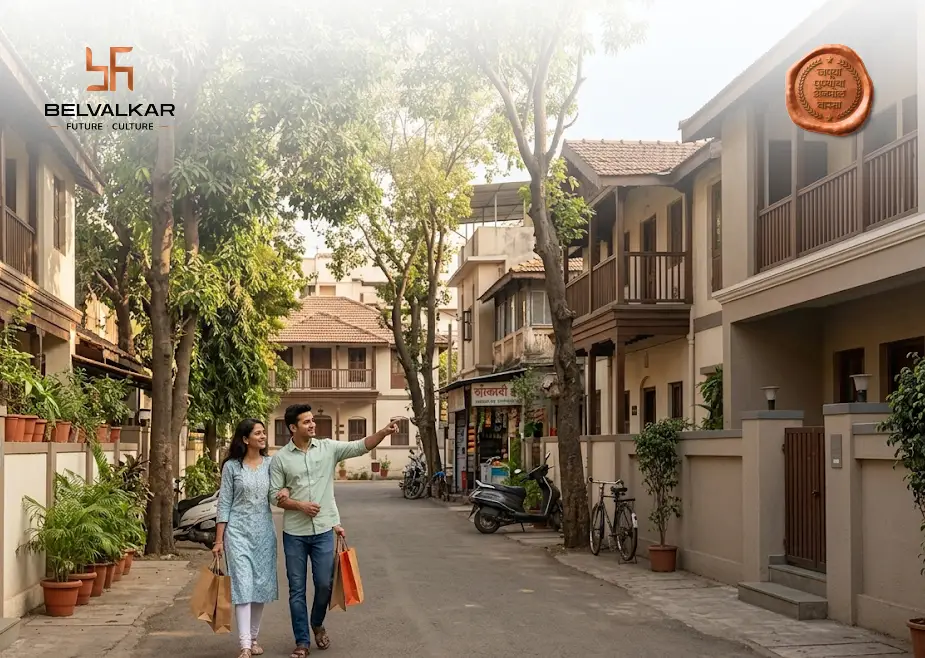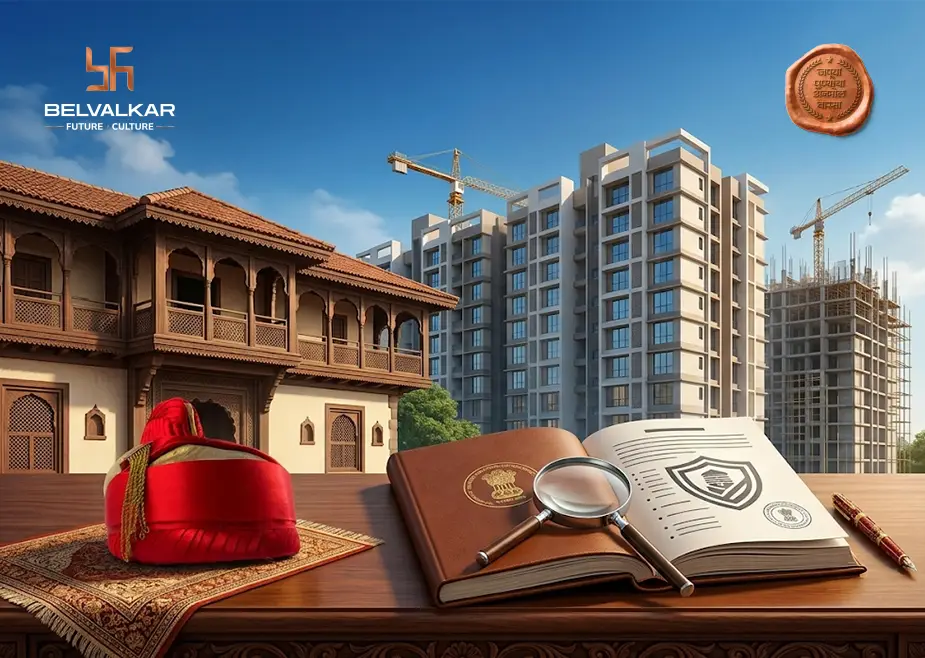

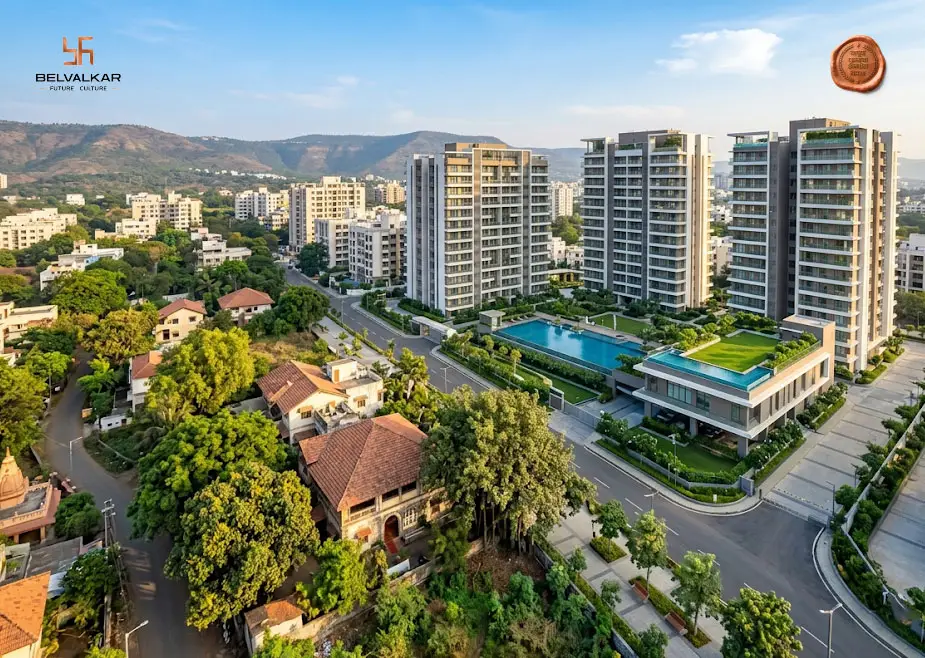
Ask anyone who lived in Pune in the 1990s what they remember about Kothrud, and you will hear the same things. Bungalows. Empty plots. A long, dusty ride out on Paud Road. Kothrud was where the city ended and the hills began.
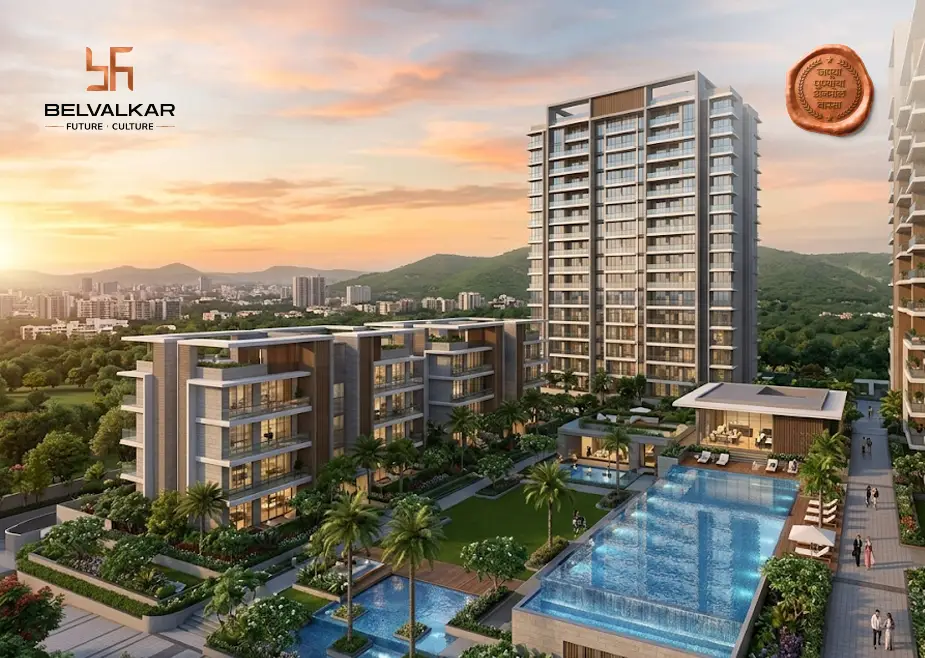
That Kothrud is gone. What replaced it is one of the most expensive residential pockets in west Pune, with a metro line running through it and a steady stream of luxury real estate projects in Pune quietly changing the skyline street by street.
The interesting part is how it happened. Kothrud did not grow the way Hinjawadi or Kharadi grew. No big IT parks pulled people in. There was no empty land waiting for towers. Kothrud got denser instead. Old buildings came down and new ones went up on the same plot, often for the same families.
This is really a story about redevelopment, and Kothrud is the clearest example of it in the city.
What actually changed in Kothrud?
Kothrud changed because it ran out of land, not because it found more.
By the early 2000s, most open plots were built on. Anyone who wanted to build something new had one option left: work with what was already standing. So builders started approaching societies from the 1970s and 1980s. Buildings with leaking terraces, no lifts, no parking. The offer was simple. Let us pull this down and give you a better one.
That deal is the engine behind almost every new tower you see in Kothrud today. The area did not expand. It rebuilt itself.
Why is Kothrud considered a luxury market now?
Kothrud is a premium market for four reasons, and none of them have much to do with marketing.
Land is scarce, so new supply comes almost entirely from redevelopment. Only a small number of homes reach the market each year. Small supply plus steady demand does what it always does to price.
The social infrastructure is already finished. Schools, colleges, hospitals and markets have been here for thirty years. Nobody is waiting for a promised amenity to show up in phase three.
The metro arrived here before it arrived almost anywhere else in Pune. More on that in a moment.
And the buyer has changed. Kothrud used to be a pensioner’s neighbourhood. It still has that calm, but the people booking 3 and 4 BHK homes here now are doctors with clinics down the road, business families upgrading within the same lane, and NRIs who want a Pune address that holds value when the market cools.
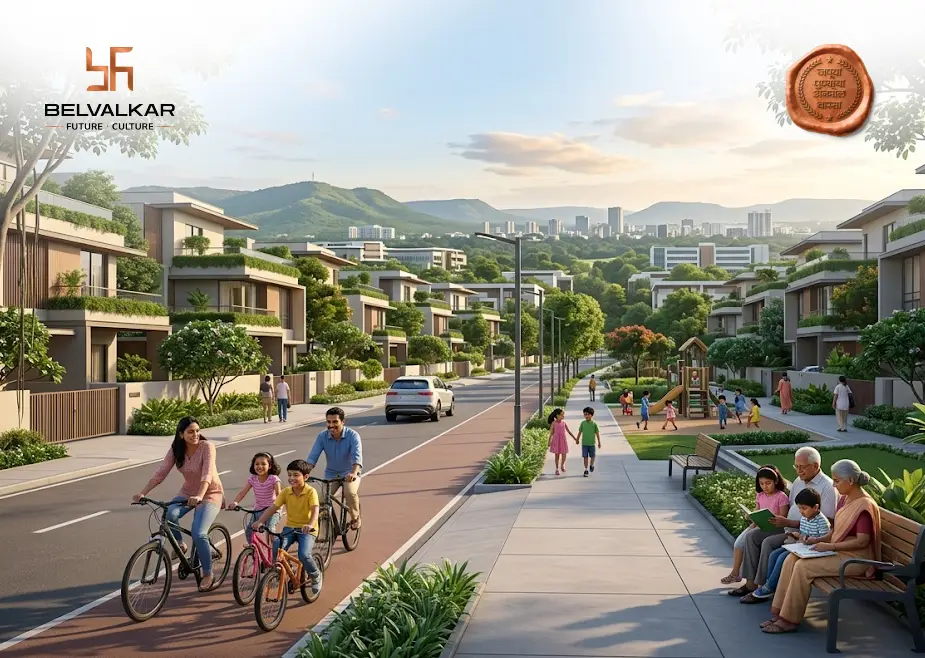
The result is unusual. The old residents mostly did not leave. They just moved into better buildings on the same street, which is why Kothrud now shows up on every shortlist of luxury real estate projects in Pune without ever having marketed itself as one.
The metro made the biggest difference
Kothrud sits at the western end of the Pune Metro’s Aqua Line, which runs from Vanaz to Ramwadi. It is a 14.66 km elevated corridor with 16 stations, and the full stretch has been operating since March 2024.
Four of those stations sit in or right next to Kothrud: Vanaz, Anand Nagar, Paud Phata (earlier called Ideal Colony) and Nal Stop. A family living here can reach Deccan, Shivaji Nagar, Ruby Hall and Kalyani Nagar without touching Karve Road traffic once. If you have ever tried to cross Nal Stop at 6 pm, you know what that is worth.
There is more on the way. In March 2024 the state government approved a 1.12 km extension from Vanaz to Chandani Chowk, which adds two stations, Kothrud Bus Depot and Chandani Chowk. For a neighbourhood that spent two decades complaining about its commute, that is a genuine change in daily life, and buyers priced it in fast.
How redevelopment in Pune actually works
Redevelopment is when an old housing society pulls down its existing building and a builder constructs a new one on the same land, usually at no cost to the residents.
The short version of the deal goes like this. The builder gets to use extra construction area on the plot, called FSI, plus additional rights bought from the market, called TDR. Part of that new area goes back to the original flat owners as a bigger home. The rest is sold to new buyers, and that is where the builder’s margin comes from.
For residents, the appeal is easy to see. A larger flat, a lift, covered parking, plumbing that does not leak, and a building that meets current fire and earthquake norms. Most deals also pay rent while construction is on.
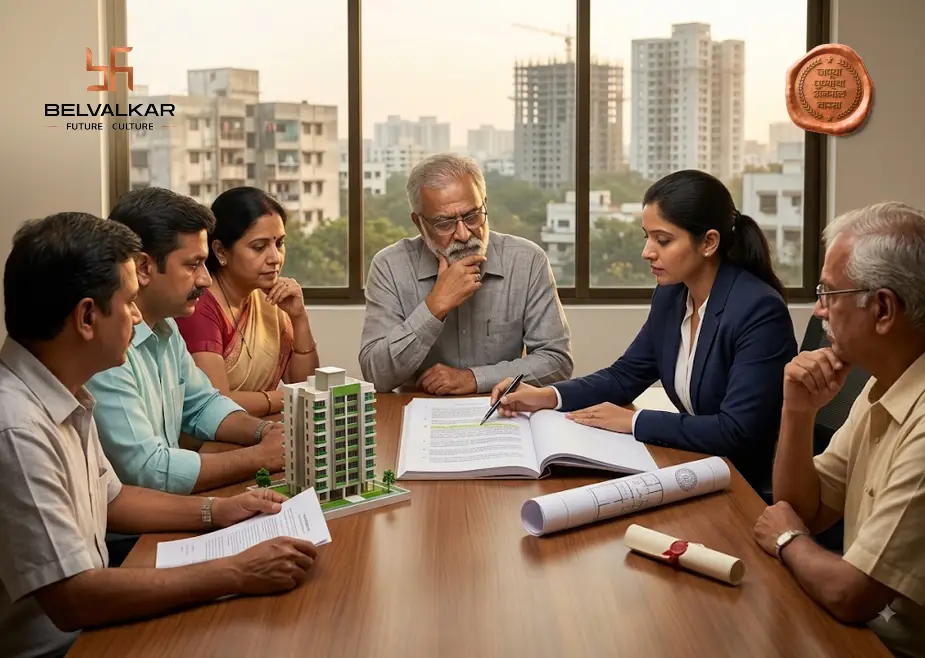
It is not risk free, and anyone who says otherwise is selling something. Projects stall. Agreements have gaps that only surface when something goes wrong. The societies that come out of this happy compare at least three offers, get a property lawyer to read the development agreement line by line, and go and look at buildings the developer has actually finished.
Where redevelopment is happening in Pune right now
Kothrud is the biggest cluster, but it is not alone. Most of the active Pune redevelopment projects sit in a tight ring around the old city.
- Erandwane and Prabhat Road, where bungalow plots are turning into small, low-density luxury residential projects in Pune
- Law College Road and Bhandarkar Road, quiet lanes with strong resale value and almost no new land
- Model Colony and Shivaji Nagar, where residential and commercial buildings sit side by side and FSI allowances are better because the roads are wide
- SB Road, which has slowly become a mixed corridor of offices and premium homes
If you are tracking new projects in Erandwane, or new projects on Bhandarkar Road, you are watching the same thing that happened in Kothrud, just on a smaller plot.
Kothrud or Baner? An honest comparison
A fair question, if you have the budget for either.
Baner and Balewadi give you newer buildings, bigger clubhouses and far more homes to choose from. Kothrud gives you a location that is already done. Nothing is under construction around you. The school is a ten minute walk, not a ten kilometre drive. The metro is running today, not promised for 2028.
Kothrud also has less churn. People buy here and stay put, which keeps the buildings better maintained and the rental market steady.
The trade-off is space and price. You will pay more per square foot in Kothrud than in most of west Pune, and you will get a smaller balcony for it. That is the deal. Plenty of people take it.
What to check before you book a home in Kothrud
Before you sign anything on a redevelopment project, look at five things.
- The RERA number. Search it on the Maharashtra RERA site and read the real project details, not the brochure.
- Who owns the land. In redevelopment the society usually holds it, so check that the development agreement is registered and that the society passed a proper resolution.
- The builder’s delivery record. Not their launches. Their finished buildings. Go stand in one and talk to somebody who lives there.
- The parking. Old Kothrud lanes are narrow. A tower with sixty flats and forty parking spots will be a daily argument.
- Water and power. Ask about the borewell, the tanker dependency and the backup. Established areas have established problems too.
Is Kothrud a good investment in 2026?
For end users, Kothrud is one of the safer bets in Pune. Prices here have held up across market cycles because supply is genuinely limited and the demand is local rather than speculative.
For investors chasing a quick jump, it is a slower market. You are buying stability, not a spike. Among luxury real estate projects in Pune, the ones that rewarded people here were not the flips. They were the flats somebody held for ten years while the metro arrived and the neighbourhood filled in around them.
If you want faster paper growth, east Pune will probably beat it. If you want a home your family will still want to live in twenty years from now, Kothrud is hard to argue with.
The bigger picture
What happened in Kothrud is starting to happen to the rest of central Pune. The city is running out of land in the places people actually want to live, which means most of the new residential projects in Pune worth having over the next decade will come from rebuilding old neighbourhoods rather than opening new ones.
That puts a lot of weight on which builder a society picks. Redevelopment is a long relationship, not a transaction, and the paperwork tends to outlast everybody’s patience. It is why societies shortlisting the top redevelopment builders in Pune ask the boring questions first: how many buildings have you actually handed over, and were you still around when the last one had a problem. Belvalkar Group has been building in these neighbourhoods since 1969 and works on redevelopment projects in Kothrud, Erandwane and Prabhat Road, which is the kind of record that survives those questions.
Kothrud figured this out early. The rest of Pune is catching up.
Frequently asked questions
Is Kothrud a good place to buy a flat in Pune?
Yes, particularly for families and end users. Kothrud has established schools, hospitals and markets, four metro stations on the Aqua Line, and very limited new supply, which has kept property values stable across market cycles.
Why are homes in Kothrud so expensive?
Because there is almost no open land left. Nearly every new home in Kothrud comes from the redevelopment of an old society or bungalow plot, so only a small number of flats reach the market each year while demand stays steady.
What is redevelopment in real estate?
Redevelopment is when an old housing society demolishes its existing building and a developer constructs a new one on the same land. The original flat owners get a larger, modern home at no cost, and the developer earns by selling the extra flats created through additional FSI and TDR.
Which areas in Pune have the most redevelopment projects?
Kothrud, Erandwane, Prabhat Road, Law College Road, Bhandarkar Road, Model Colony, Shivaji Nagar, SB Road, Sadashiv Peth and Navi Peth are the most active redevelopment pockets in Pune.
Does Kothrud have a metro station?
Yes. Kothrud is served by Vanaz, Anand Nagar, Paud Phata (earlier Ideal Colony), and Nal Stop on the Aqua Line, which runs from Vanaz to Ramwadi. An approved extension from Vanaz to Chandani Chowk will add Kothrud Bus Depot and Chandani Chowk stations.
How long does a redevelopment project take in Pune?
Most projects take roughly three to four years from the signing of the development agreement to possession, depending on approvals, plot size, and the builder. Ask for a written timeline with penalty clauses before anyone signs.
How do I choose a redevelopment builder for my society?
Compare at least three offers, check RERA registrations, visit completed buildings and speak to the people living in them, and have a property lawyer read the development agreement. A builder who pressures the society to sign within a week is telling you something.