
Here is something most people who live in Pune do not think about often. The district now has six things that carry a GI tag. That is an official mark from the government, which says a product truly belongs to a place and cannot honestly be made anywhere else.
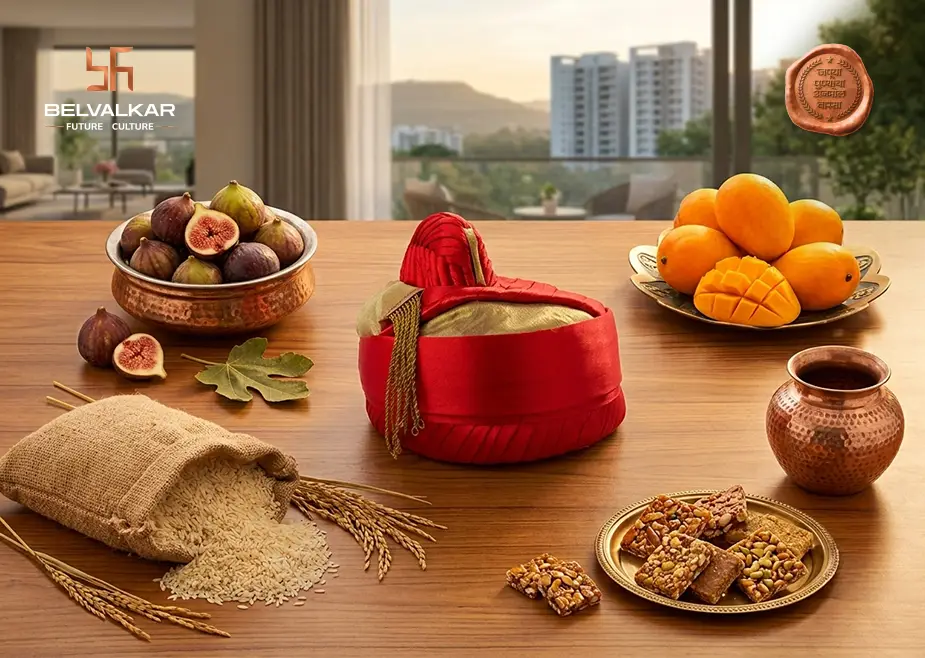
Six of them. A turban, some figs, a type of rice, a mango, hand-beaten copper vessels, and a sweet you probably ate on a school trip. Each one got a stamp that basically says, “this is ours, and only ours.”
I find that oddly moving. Because it points at something bigger than food and crafts. It says Pune has a character you cannot copy. And once you sit with that idea, it quietly changes how you think about living here.
What is a GI tag, and why should a home buyer care?
A GI tag, short for “Geographical Indication,” is a legal label given to a product that comes from one specific place and gets its qualities from that place. The soil, the weather, the local skill, the history. All of it goes into the product, so it cannot be copied somewhere else and sold under the same name. In India, these tags are granted by the Geographical Indications Registry in Chennai.
You can make peanut chikki in any city. But Lonavala chikki is Lonavala chikki. You can grow figs in many places. But a Purandar fig tastes the way it does because of Purandar.
So why does this matter to someone looking for a home? Because the same rule quietly applies to neighbourhoods. Some places have a character built over decades that a brand new address simply cannot manufacture. When you buy a home, you are not just buying walls. You are buying into a place, and places are not all the same.
The six things that could only come from Pune
Pune district’s GI list is a nice little tour of what the region does well. Here is the full set.
- Puneri Pagadi. The traditional Pune turban, worn as a symbol of pride and respect. It got its GI tag back in 2009. It was made popular in the 1800s by the social reformer M.G. Ranade and later worn by leaders like Lokmanya Tilak.
- Purandar figs. Grown in Purandar taluka, these figs have a deep violet skin and lots of soft, sweet pulp. The flavour comes straight from the local soil and climate.
- Ambemohar rice. A soft, aromatic rice from the Mulshi side of the district. The name means “mango blossom” in Marathi because the cooked rice actually smells a little like it.
- Junnar Hapus. The Alphonso-style mango grown around Junnar, the same area that holds Shivneri Fort, where Shivaji Maharaj was born. History and fruit in one place.
- Tambat copper work. The old craft of shaping copper vessels by hand, beat by beat, carried on by Pune’s Tambat craftsmen for generations.
- Lonavala chikki. The jaggery and peanut sweet that started in the 1880s as a cheap energy snack for railway workers building the Ghat tunnels. It finally received its own GI tag in July 2026.
Read that list again and you will notice something. It covers a fort town, a hill station, farm villages, and old city lanes. That spread is the point. Pune is not one single flavour. It is many, and they all belong to the same place.
So what does this have to do with living in Pune?
Everything, in a quiet way.
A city’s real character is made of things you cannot order online or build in a year. It is the smell of the first monsoon rain on hot ground. It is a Sunday morning walk under old trees. It is the colleges that pull in students from across the country, the small bakeries that have run for fifty years, and the way people still greet neighbours by name.
You can move to a city for a job. You belong to a city when its daily life becomes yours. Pune makes that easy because it has held on to its roots even as it has grown into a big, modern place. That balance is rare, and it is a large part of why so many families who come here for a few years end up staying for life.
Where does Pune’s character actually live?
Answer first: mostly in the older, central parts of the city, where life has been settling in for generations.
Think of the peths, Deccan Gymkhana, Erandwane, Prabhat Road, Bhandarkar Road, Law College Road, Model Colony, Shivaji Nagar, Kothrud and the SB Road belt. These are not fresh suburbs. They are lived-in neighbourhoods with schools, temples, markets and cafes that people have loved for years.
What is interesting is how these areas stay fresh without losing themselves. They renew from the inside. Old buildings come down and better ones go up on the same plot, which is what people mean by redevelopment in Pune. So you get modern homes on streets that still feel like the real Pune.
Why old Pune keeps rebuilding itself
Because there is barely any open land left in the centre, almost every new home in these pockets comes from redevelopment. You will see redevelopment projects in Kothrud, redevelopment projects in Shivaji Nagar Pune, and a steady line of under construction projects in Shivaji Nagar. Along the SB Road belt, redevelopment builders in SB Road, Pune, are turning old societies into premium homes and offices, and the same goes for the redevelopment builders in Prabhat Road, Pune.
If you have been watching new projects in Erandwane Pune, new projects on Bhandarkar Road, or new projects on Law College Road, you are seeing the same story play out on quieter streets. Model Colony adds its own twist, with both residential projects in Model Colony and commercial projects in Model Colony sitting side by side, because the roads there are wider. In every case the idea is the same: keep the neighbourhood, upgrade the home.
What should you look for in a home and in a builder?
Answer first: a home that fits how you actually live and a builder who genuinely understands the city.
Square footage is easy to compare. Belonging is not. A good home in Pune is close to the things that make your days better, whether that is a school, a park, the metro, or an old friend two lanes away. That is why real local knowledge matters far more than a glossy brochure.
This is worth remembering when you look for the best real estate developers in Pune. The ones who know the city build differently. They understand which lanes flood, which streets stay quiet, and which corners get the morning sun. They build homes that feel like they belong on that street, not towers that could stand in any city in the country. A rooted builder is, in a way, the GI tag of the housing world.
The bottom line
Pune’s six GI tags are a small, official reminder of a big truth. Some things are shaped so deeply by a place that they can only come from there. The city itself is one of those things.
If you are thinking of making Pune your long-term home, it helps to work with people who treat the city the same way. Belvalkar Group has built here for years, mostly through redevelopment in the older neighbourhoods, so their homes tend to sit naturally on the streets they belong to. In the end, that is what sets apart the best real estate developers in Pune from the rest. They build for belonging, and belonging is the one thing you cannot fake.
Frequently asked questions
What are the GI-tagged products of Pune district?
Pune district has six GI-tagged products: Puneri Pagadi, Purandar figs, Ambemohar rice, Junnar Hapus mango, Tambat copper work, and Lonavala chikki. Each one is officially recognised as belonging to the region.
What is a GI tag in simple words?
A GI tag, or Geographical Indication, is an official label given to a product that comes from a specific place and gets its special qualities from that place. It means the product cannot honestly be made and sold under the same name elsewhere.
When did Lonavala chikki get its GI tag?
Lonavala chikki was officially awarded its GI tag in July 2026. The sweet dates back to the 1880s, when it was made as a cheap, energy-rich snack for railway workers in the Western Ghats.
Why is Pune considered a good place to live?
Pune mixes a strong local character with modern city life. It has respected schools and colleges, a pleasant climate, green older neighbourhoods, good connectivity, and a settled, friendly feel, which is why many families choose to stay for the long term.
Which old Pune neighbourhoods are seeing redevelopment?
Central areas like Kothrud, Erandwane, Prabhat Road, Bhandarkar Road, Law College Road, Model Colony, Shivaji Nagar and the SB Road belt are all seeing active redevelopment, since there is little open land left and old buildings are being rebuilt on the same plots.
What should I look for in the best real estate developers in Pune?
Look for a developer with real local knowledge, a solid track record, clear timelines, and homes that suit the neighbourhood. A builder who understands the city usually makes better choices about location, design and everyday comfort.
Why do Purandar figs taste different?
Purandar figs get their deep violet skin, soft pulp and sweet taste from the soil and climate of Purandar taluka in Pune district. Those local growing conditions are the reason they earned a GI tag.