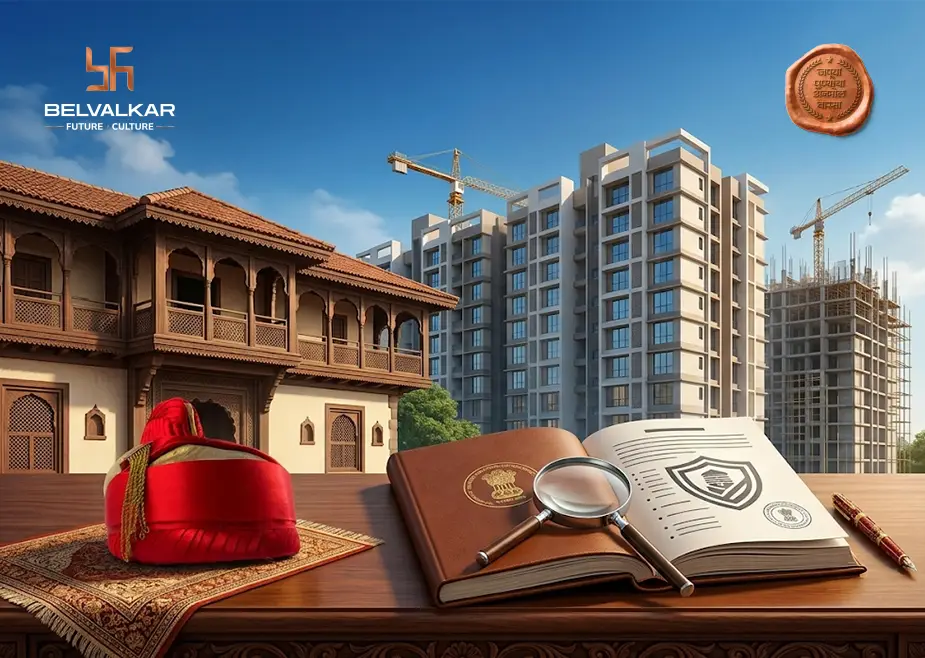

There is something an aaji in an old wada near Kasba Peth once said to her grandson, sitting on the wooden swing as the rain came down outside. Pune does not just celebrate Ganeshotsav. Pune lives it. Every year, when the first dhol beats roll down the lanes of Sadashiv Peth, something inside the city wakes up. It is older than any of us. It is what we call varsa. Our inheritance.
For Marathi families, this festival is the thread that ties one generation to the next. Aaji passes the modak recipe to aai. Aai passes the aarti to her daughter. The aukshan thali, the silver paat, the brass diva, they all come down through the years. So when we talk about Ganpati, we are really talking about a story that started long before us and will go on long after.
Here is a quick look at the dates this year, followed by the deeper story.
Ganpati 2026 Dates: Agaman, Gauri Awahan, and Visarjan
If you are planning your puja or visarjan, mark these dates on the calendar:
- Ganesh Chaturthi / Bappa cha Agaman: Monday, 14 September 2026. The most auspicious sthapana muhurat is between 11:02 AM and 1:31 PM.
- Dedh Divsacha Visarjan (1.5 day): Tuesday, 15 September 2026.
- Gauri Awahan: Thursday, 17 September 2026. The muhurat for welcoming Jyeshtha Gauri is open till around 7:52 PM.
- Gauri Pujan: Friday, 18 September 2026.
- Gauri Visarjan: Saturday, 19 September 2026.
- Anant Chaturdashi / Final Visarjan: Friday, 25 September 2026.
What Varsa Really Means
In Marathi, varsa is a beautiful word. It is not only inheritance in the legal sense. It is everything your family hands you that money cannot buy. A way of folding your hands at the diva. A particular naivedya that aaji used to make. The corner of the hall where Bappa has been sitting for three generations.
When you sit in front of your Ganpati this year, look around the room. The murti might be new, but the silver mukut may be your grandfather’s. The wooden makhar might have been carved by a great-uncle in Sangli. Even the way you say “Ganpati Bappa Morya, Mangal Murti Morya” carries the rhythm of your father’s voice.
That is varsa.
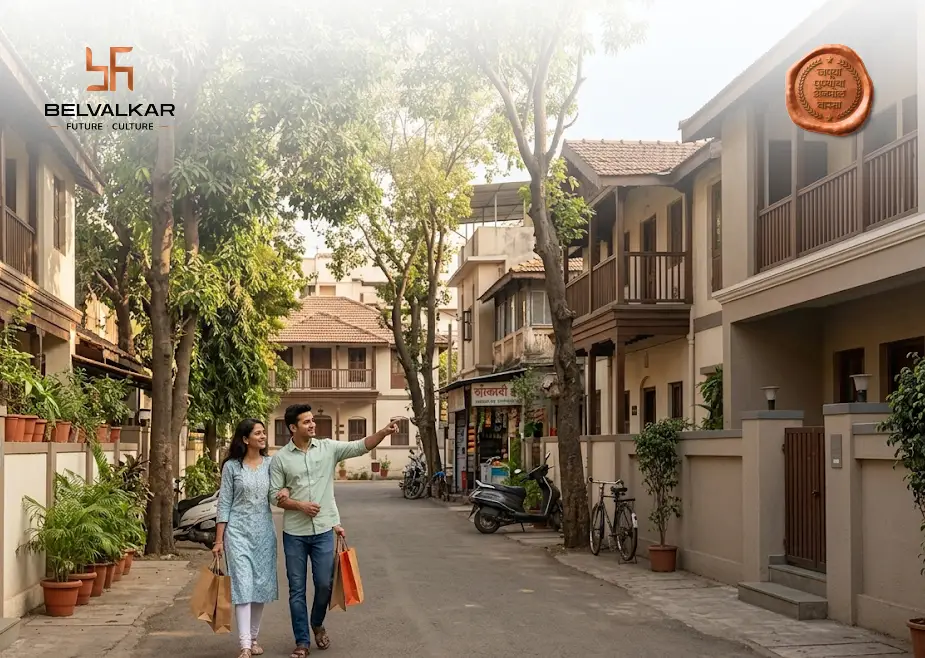
Pune, more than any other city, is built on this idea. The lanes still carry the names of the peths. The old temples still stand where they were built four hundred years ago. The dhol-tasha pathaks practise on the same ground their fathers practised on. Ganeshotsav is not a once-a-year event in Pune. It is the season when the whole city’s varsa walks out into the streets at once.
The Story Behind Pune’s 5 Manache Ganpati
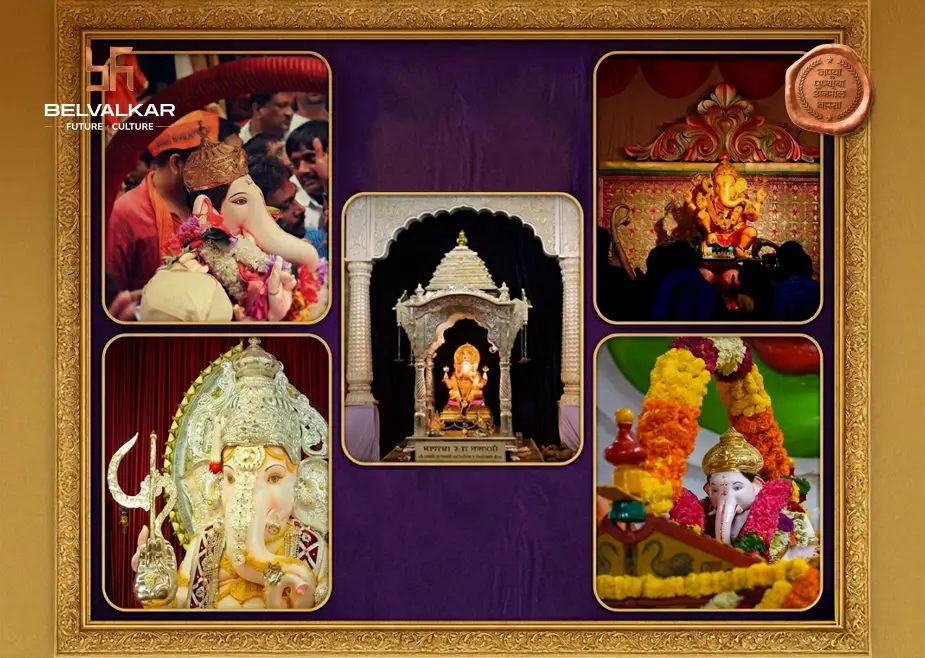
To understand Pune’s varsa, you have to know the five Manache Ganpati. These are the five mandals that lead the visarjan procession every year. The honour is given by tradition, not by size or money. Each one carries a piece of the city’s story.
1. Kasba Ganpati (Manacha Pahila)
This is the gramdaivat of Pune. The story goes that the idol was first found near the home of Vinayak Thakar, close to where Jijabai lived. Around 1639, Shivaji Maharaj and Jijabai built a small temple for it. Even today, Kasba Ganpati leads the visarjan procession. No other mandal can begin until this Bappa has reached the river.
2. Tambdi Jogeshwari (Manacha Dusra)
The temple of Goddess Jogeshwari, the gramdevi of Pune, dates back to the 15th century. What makes this Ganpati special is a quiet tradition. The idol is immersed every year and a new one is installed the next. It was Lokmanya Tilak himself who gave Tambdi Jogeshwari the status of the second manacha Ganpati in 1893.
3. Guruji Talim (Manacha Tisra)
This one is the most beautiful chapter in Pune’s communal story. It was started in 1887, even before Tilak made Ganeshotsav a public celebration. Two families, one Hindu and one Muslim, came together to install this Ganpati. Through every storm in our country’s history, this mandal has stood as a quiet proof that faith can be shared.
4. Tulshibaug Ganpati (Manacha Chautha)
Started in 1901, Tulshibaug Ganpati is a favourite of the crowds. The idol is around 13 feet tall and wears ornaments weighing more than 80 kilos. Since 1975, the mandal has used the first glass fibre Ganpati statue in Pune. The decoration work has been done for years by the artist D. S. Khatawkar and now his family carries that legacy forward.
5. Kesariwada Ganpati (Manacha Pachva)
This is where it all began in many ways. Lokmanya Tilak started this mandal in 1894 to bring people together during the freedom movement. The early years were held at Vinchurkar Wada off Kumthekar Road. In 1905, the celebration moved to Gaikwad Wada, which we now know as Kesariwada. Every brick of that wada has a story from the independence struggle.
These five mandals are not just five idols. They are five threads of the same fabric. Together they tell you what Pune’s varsa really looks like.
How Pune Keeps the Varsa Alive Today
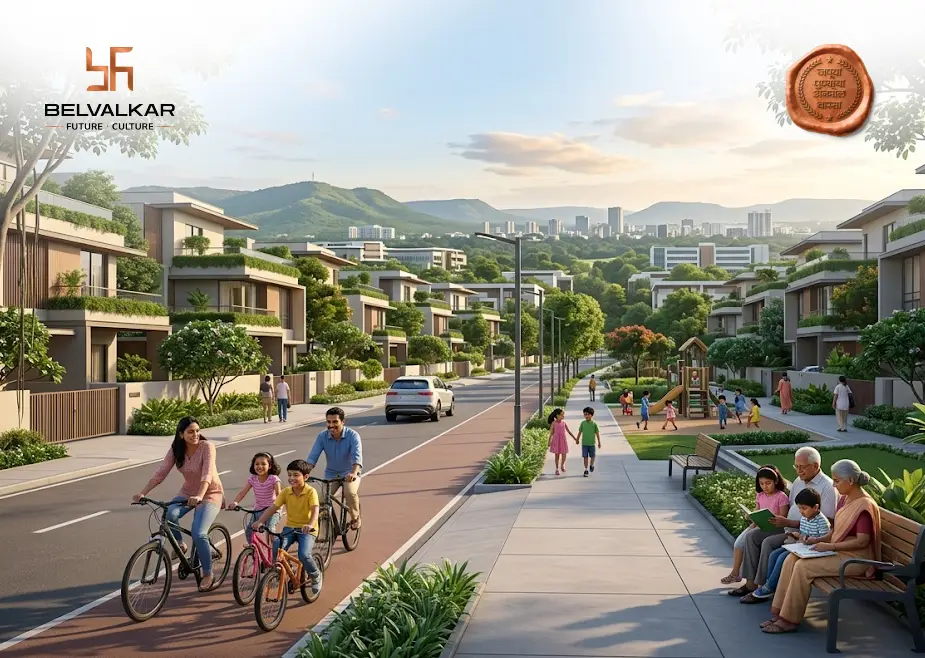
Pune has changed a lot. The peths are still there, but around them, the city now runs on metro lines, IT parks and tall buildings. Families that once lived in old wadas on Bhandarkar Road, Prabhat Road, Erandwane, Kothrud and Model Colony have slowly moved into newer homes.
And yet, Ganpati comes home every year. The same arti is sung, same modaks are made & same patti is laid down for the makhar.
That is what makes the city interesting. It is one of the few places where the old and the new sit on the same sofa. A flat in Shivaji Nagar might be five years old, but the Bappa inside it is the same one the family has worshipped for sixty years.
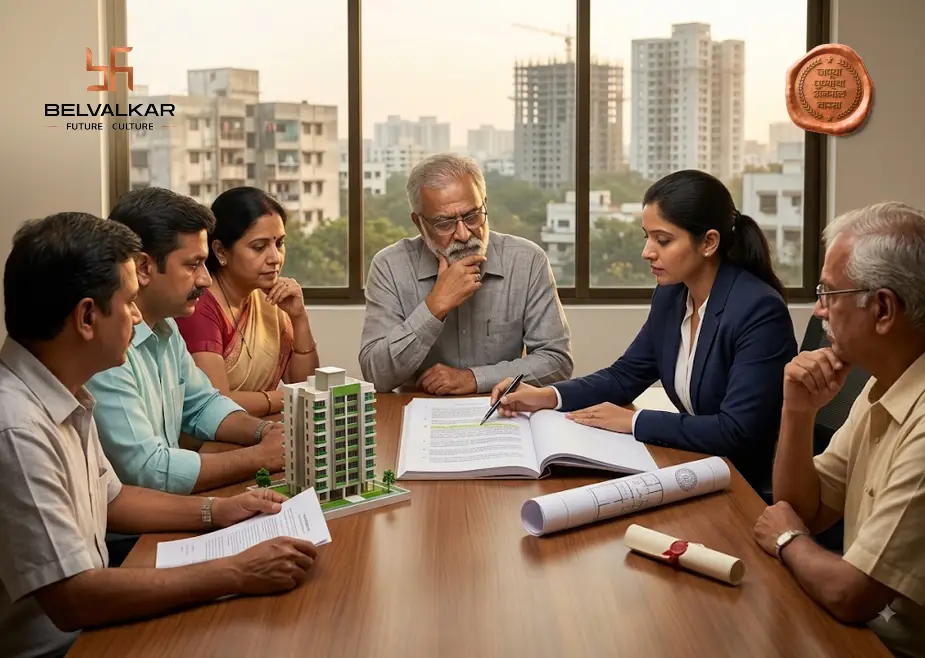
When families build new homes today, especially through redevelopment projects in Pune, they don’t want to leave any of this behind. They want their old neighbours back. Devotees want the same September sun coming in through the kitchen window. They want their Bappa’s corner to feel just as right as before.
Where Varsa Meets the New Home
When old wadas and bungalows in Shivaji Nagar, Erandwane, Kothrud, Bhandarkar Road and Model Colony are rebuilt, the question is not just about lifts and parking. It is about whether the new home will hold the family’s varsa as gently as the old one did.
A good builder understands this. A good home is one where, on the morning of Ganesh Chaturthi, the family wakes up and the house simply knows what to do.
Belvalkar Group has been building homes in Pune since 1969. Across redevelopment projects in Pune, in localities like Bhandarkar Road, Prabhat Road, Model Colony, Erandwane and Kothrud, the idea has stayed the same. Build homes where the next generation feels at home from the first puja itself. Because that is the only way a varsa really survives. From one Bappa to the next.
So this 14 September, when you say Ganpati Bappa Morya, remember the lanes, the wadas, the five mandals, and all the hands that brought this festival into your house.
That is your varsa. Keep it gently. Pass it on.
Frequently Asked Questions
Q1. When is Ganesh Chaturthi 2026?
Ganesh Chaturthi 2026 falls on Monday, 14 September 2026. The Madhyahna sthapana muhurat is from 11:02 AM to 1:31 PM.
Q2. When is Gauri Awahan, Pujan and Visarjan in 2026?
– Gauri Awahan is on Thursday, 17 September.
– Gauri Pujan is on Friday, 18 September.
– Gauri Visarjan is on Saturday, 19 September 2026.
Q3. When is the final Ganpati Visarjan in 2026?
Anant Chaturdashi, the day of the final visarjan, falls on Friday, 25 September 2026.
Q4. Which are the 5 Manache Ganpati in Pune?
The five Manache Ganpati in Pune, in order, are Kasba Ganpati, Tambdi Jogeshwari, Guruji Talim, Tulshibaug Ganpati and Kesariwada Ganpati.
Q5. Who started the first public Ganeshotsav in Pune?
Lokmanya Bal Gangadhar Tilak started the Sarvajanik Ganeshotsav in Pune in 1893 to bring people together during the freedom movement.