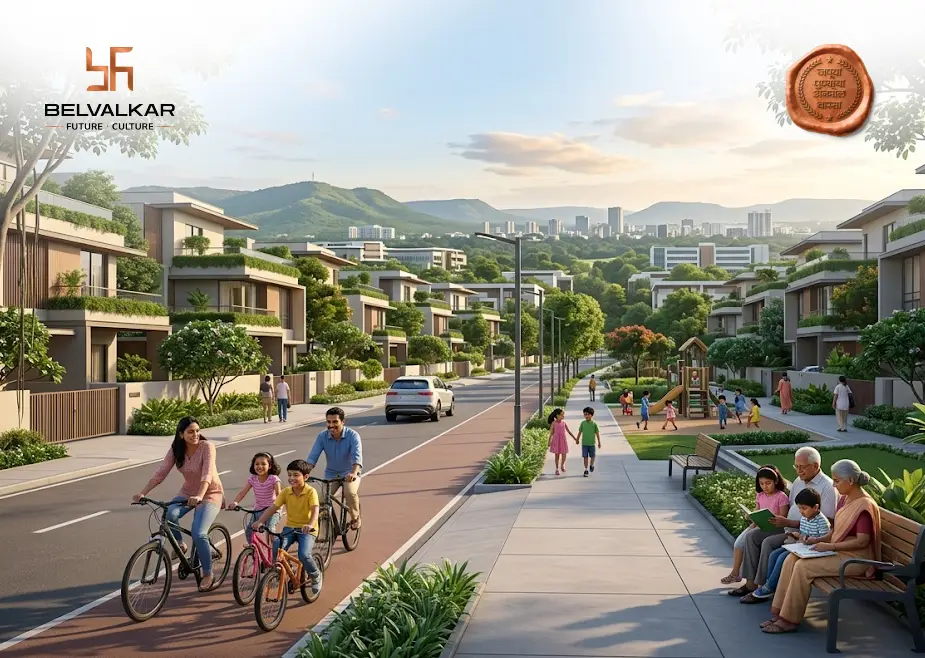

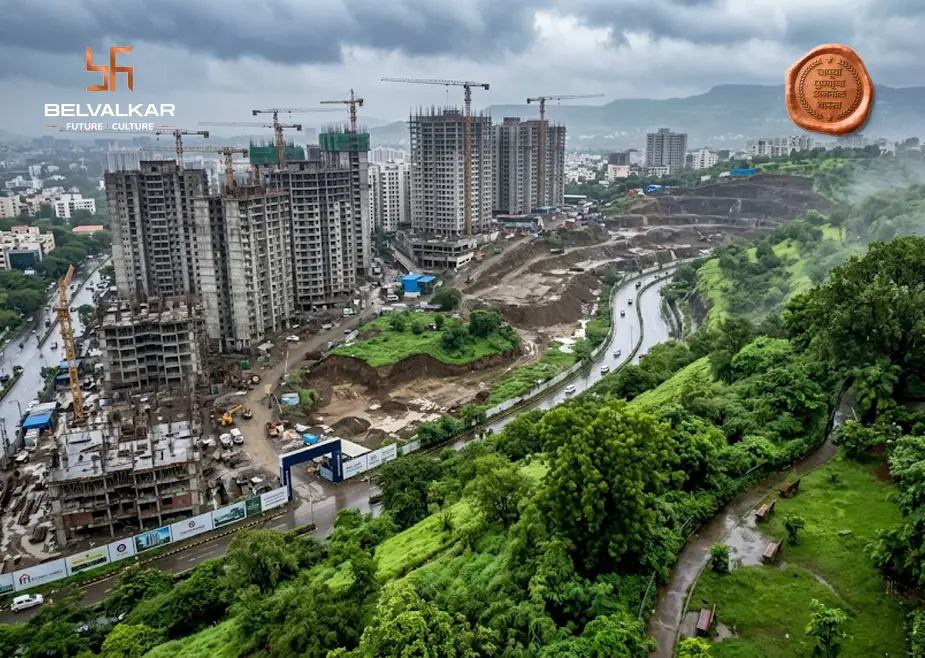
Every June, Pune changes. The hills turn green. The Mutha starts to flow. Old peepal trees on Bhandarkar Road drip with rain. For a few months, the city looks the way it used to. Before the towers. Before the flyovers. A quiet, tree-lined town that grew too fast.
World Environment Day lands right at the start of this season. If you live here, the timing feels right. The rains remind you what Pune still has. And what it keeps losing, slowly, one old plot at a time.
This blog is about both. The green Pune that survives. And what the city’s builders need to protect if growth is going to mean anything real.
Why the Monsoon Season Matters Beyond the Rain
Pune gets around 700 to 800 mm of rain every year. Most of it falls between June and September. That rain does more than fill tanks. It feeds the city’s lakes. It tops up the groundwater. It keeps the trees alive through the long dry months that follow.
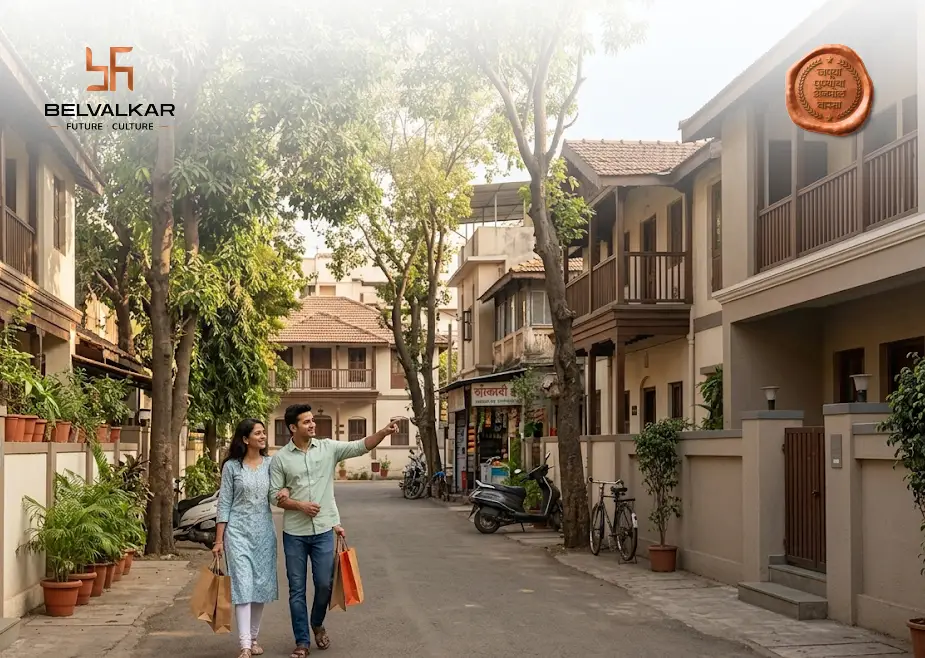
The older parts of Pune were planned around trees. Erandwane. Shivaji Nagar. Model Colony. Law College Road. Prabhat Road. Wide roads, deep setbacks, gulmohar and rain trees lining the footpaths. Walk through these areas in July and you get it right away. People have paid more to live here for decades. Not just for the address. For the feel of a monsoon evening in a street that still has its canopy.
That is what is at stake when redevelopment comes to these pockets.
Pune’s Green Neighbourhoods — and Why They Need Attention
Erandwane and Law College Road
This part of the city has some of the best tree cover in Pune. The rain trees along FC Road and the older plots on Law College Road keep the area noticeably cool. PMC heat studies show that tree-dense wards like Erandwane run 2 to 3 degrees cooler than newer outer areas in peak summer.
Builders working on new projects in Erandwane need to plan around the trees first. Not as an afterthought once the structure is up.
Bhandarkar Road and Prabhat Road
Most people picture these two roads when they think of old Pune. Narrow lanes. Big gardens. Old walls with moss in July. A lot of this land is now being looked at for new projects. What gets built on Bhandarkar Road and Prabhat Road over the next ten years will change what these streets feel like for good.
The better outcome is builders who see the existing trees as an asset. There is also a straight commercial case here. Homes in these areas will hold higher value if they are designed around what makes the streets special — not in spite of it.
Shivaji Nagar and Model Colony
Shivaji Nagar has more old trees per street than almost any other part of Pune. The campuses, the bungalow lanes near SB Road, the plots around Model Colony — all of it sits inside a green belt that should not be taken for granted. Builders doing new work in Shivaji Nagar and commercial projects in Model Colony need to take that context seriously.
PMC does have a heritage tree list. But the rules are not always enforced. That gap means builders have to choose to do the right thing. The option to design around a tree is always available. Removing it and planting three saplings elsewhere is not the same.
Kothrud
Kothrud came up later than the older city but still has green character — especially near Deccan Gymkhana and Karve Nagar. Redevelopment projects in Kothrud are picking up pace as the older housing stock ages. The key concern here is not just trees. It is ground cover and drainage. The area already floods in heavy rain years. More paved ground will make that worse.
Five Things Residents and Builders Can Do This Environment Day
1. Protect Tree Roots During Construction
Trees near a site often die not because they are hit directly. They die because the soil around them gets packed down during work. A low barrier around the base of a tree can save it. No planting scheme will grow you back a 30-year-old tree in time that matters.
2. Keep Some Ground Open and Permeable
Every square metre you pave over is one that cannot soak up rain. In a city like Pune, with a short but heavy monsoon, that adds up fast. Leaving open ground around trees and in common areas reduces pressure on drains. Pune’s drains are already stretched. They do not need more runoff.
3. Harvest Rainwater at the Building Level
Pune’s rain season is short and intense. A rooftop harvest system can cut how much a building draws from PMC supply. It also keeps the water table stable through the dry months. That matters for the trees. It matters for the whole area’s feel and temperature.
4. Plant Trees That Actually Belong Here
Neem, peepal, amla, moringa, Arjuna. These are Pune’s own trees. They suit the soil. Birds and insects use them. They handle dry spells better than most ornamental plants. If your society is doing a green drive this Environment Day, pick these over anything that needs constant watering.
5. Ask for a Tree Survey Before Redevelopment Starts
In Mumbai, some redevelopment approvals now need a full tree count before work starts — not after. That gives the city real data. It gives residents something to push back on if needed. Pune should adopt the same rule. It is not complex. It just needs to be asked for.
What Good Redevelopment in Pune Actually Looks Like
Redevelopment is not the problem. The problem is how it gets done. Done well, it means more homes on land that already has roads, water, and power. That is better than pushing growth into Pune’s outer edges where farmland and forest patches still survive.
Done badly, it means taller buildings, less ground, no trees, and streets that run five degrees hotter than they did a decade ago. That is the version Pune gets in too many places.
The better version starts by treating what is already on the site as something worth keeping. Look at the trees before you draw the plans. Design for airflow so residents are not running ACs through nine months of good Pune weather. Put in soak pits. Leave some ground open.
Residents in Erandwane, on Law College Road, and around Bhandarkar Road have every right to expect this from new residential projects in their areas. And more buyers are now choosing for it too.
How Belvalkar Group Fits Into This Picture
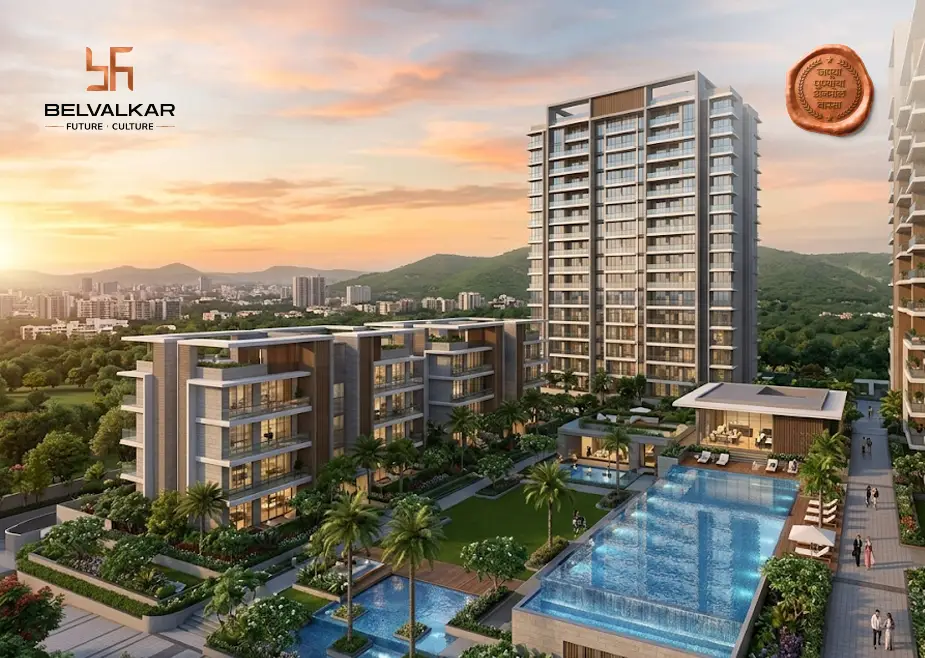
Belvalkar Group has worked in Pune’s core areas for over twenty years. Projects on Bhandarkar Road, in Erandwane, and along the city’s main corridors sit in exactly the kind of older, green areas this blog is about. The group’s work signals an awareness that these areas are more than their land value.
Builders who work in these pockets carry a real duty. The areas are not empty lots. They have history, trees, and a character that took decades to build. The job is to provide better housing here without losing that. That is harder than building tall on a blank site. It is also what buyers in these areas are paying for.
Pune’s Green Pockets Worth Visiting This Varsha Season
Empress Botanical Garden in Yerawada. Parvati Hill. The road out toward Sinhagad. The forest patch between Baner and Pashan. Khadakwasla in full flow.
The monsoon is the best time to see what Pune is still holding onto. It is also the best time to ask what happens to these places if no one pays attention.
The answer, most of the time, is that they shrink. Slowly. Until one monsoon you notice the street feels hotter than it used to. The walk you liked is gone. The tree that stood there for thirty years is not.
That is not fate. It is a set of choices. And some of them belong to the people who build this city.
FAQ: Pune Redevelopment and Green Cover
1. What are redevelopment projects in Pune?
They involve replacing older buildings, usually 30 to 40 years old with new ones that meet current standards. Most activity is in areas like Shivaji Nagar, Erandwane, Kothrud, Prabhat Road, and SB Road, where the housing stock has aged but the land is still in high demand.
2. How does redevelopment affect Pune’s tree cover?
Old bungalow plots often have trees that are 20 to 50 years old. When a plot is cleared, those trees almost always come down. The saplings planted as a replacement take decades to provide the same cover. That gap is the core environmental trade-off in Pune’s current redevelopment wave.
3. Which areas in Pune are seeing the most redevelopment?
As of 2025, the highest activity is in Shivaji Nagar, Erandwane, Kothrud, Prabhat Road, Bhandarkar Road, and along SB Road. These are areas where older homes are aging, land value is high, and buyer demand is strong.
4. What should residents check before a redevelopment project starts nearby?
Ask if a tree survey was filed with the building plan. Check if any trees on the site are on PMC’s heritage list. Look at the proposed setbacks. Smaller setbacks usually mean less room for any green cover. Ask what provision exists for rainwater use and open ground.
5. Does redevelopment have to be bad for the environment?
No. Done right, it can reduce urban sprawl by fitting more homes onto existing city land. The problem is execution. The projects that pave over everything and remove all trees make the neighbourhood worse, not just different. Green-conscious design is possible. It just needs to be demanded.
6. Why does Pune feel hotter in summer even with more buildings?
Trees cool the air through shade and by releasing water vapour. When they are removed, areas heat up. This is called the urban heat island effect. Older parts of Pune with intact tree cover are measurably cooler in April and May. New development without tree retention makes this worse.
7. What native trees should be planted in Pune?
Neem, peepal, Indian gooseberry (amla), moringa (drumstick), and Arjuna are well-suited to Pune’s soil and climate. They support local birds and insects, grow without heavy care, and survive the long dry season much better than most ornamental species.